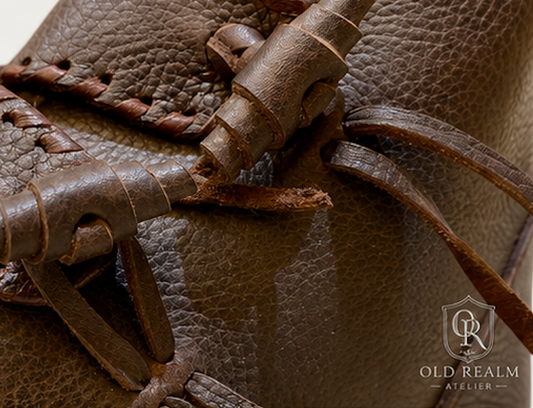
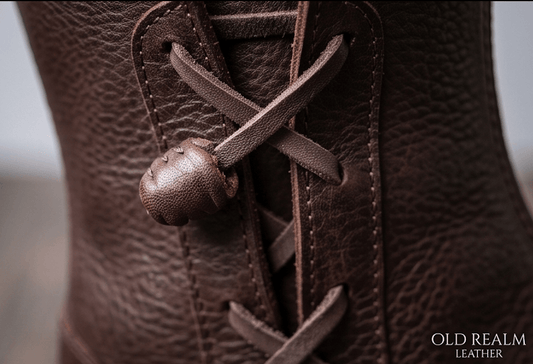
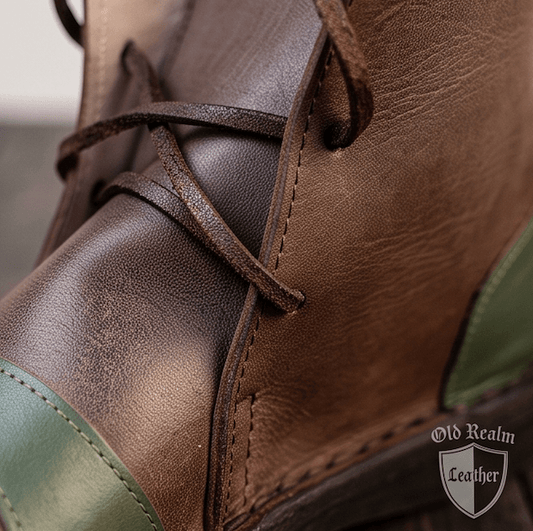
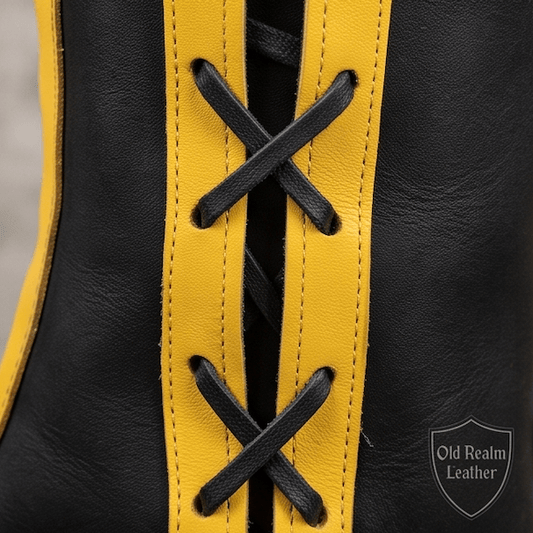
“Turnshoe” describes a historical construction method rather than one exact Viking shoe shape. In broad terms, the upper and sole are stitched while the footwear is inside out, then the shoe is turned so the seam sits differently in the finished piece. Variations of turnshoe construction appear across medieval Europe.
If you are looking for historical-inspired modern footwear, compare our medieval and Viking leather shoes.
What does turnshoe mean?
The name refers to the construction process. Leather components are joined in an inside-out orientation, then the completed form is turned right-side out. This creates a flexible shoe and protects the seam differently than later welted constructions.
Were all Viking shoes identical?
No. Archaeological evidence shows variation in shapes and fastening methods. Finds associated with Viking-age York include different leather shoes, including slip-on forms and shoes using laces, straps, or toggles.
Why are archaeological leather finds important?
Leather usually decays, so waterlogged sites with good organic preservation are especially valuable. The Coppergate excavations in York preserved leather shoes and other organic materials that help researchers reconstruct everyday life.
What did Viking turnshoes look like?
Many surviving and reconstructed examples have relatively low profiles compared with the tall fantasy boots often marketed as “Viking.” Toe shape, fastening, pattern pieces, and ankle height varied by place and period.
Were there left and right shoes?
Historical patterns varied, and surviving shoes can show fitted shapes rather than the completely symmetrical modern expectation people sometimes imagine. Exact construction depends on the archaeological example being copied.
Historical turnshoes versus modern reenactment shoes
A strict reproduction may prioritize period materials, stitching, and sole construction. A modern historical-inspired shoe may use contemporary adaptations for durability, sizing consistency, or event conditions. Buyers should decide which goal matters for their event.
Are turnshoes good for LARP?
They can create a low historical silhouette, but practical suitability depends on the actual sole, fit, terrain, and construction of the pair. A fantasy LARP usually gives more freedom than a strict living-history event.
Turnshoes and leg wraps
Low footwear pairs naturally with visible leg wraps because the ankle remains open. Read our Viking footwear and leg-wrap guide for outfit ideas.
Choose by event standard
If historical accuracy is important, ask your reenactment group which archaeological references, centuries, and regions they accept. “Viking” covers a broad time and geography.
Modern options at Old Realm Leather
Our products are historical-inspired footwear rather than a claim that every pair is a museum replica. Compare Handmade Brown Medieval Leather Shoes & Viking Style and Medieval Shoes for Viking & Renaissance Wear.
For a broader historical overview, read What Shoes Did Vikings Wear?