Turnshoes are one of the most important concepts to understand when researching medieval footwear. The term does not describe a single toe shape or social class. It describes a method of joining the upper and sole before turning the footwear into its finished orientation.
For modern historical-inspired options, browse our medieval leather shoe collection.
Why are they called turnshoes?
The upper and sole are sewn while the shoe is inside out. After stitching, the leather is turned so the finished side faces outward. This process creates a flexible construction and changes where the seam sits in relation to the ground and foot.
When were turnshoes used?
Turnshoe construction was widespread in medieval Europe for centuries. Later in the Middle Ages and into the early modern period, other methods increasingly replaced it. Exact timelines and styles vary by region.
Were all turnshoes low?
No. Historical footwear included different heights, fastening systems, and shapes. “Turnshoe” describes construction, not necessarily whether the shoe ends below or above the ankle.
What leather was used?
Historical shoes were made from animal hides processed with period methods. Modern replicas may use vegetable-tanned leather or other leathers depending on the maker and intended level of authenticity.
How were turnshoes fastened?
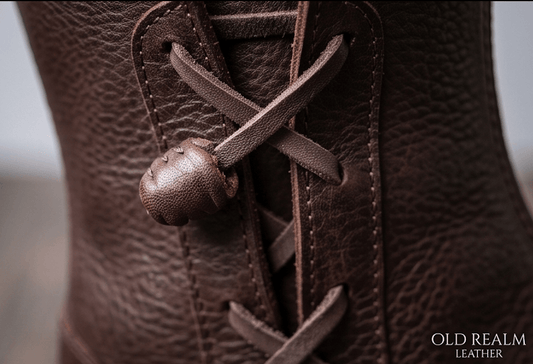
Fastening varied by design and period. Laces, straps, toggles, and slip-on forms all appear in historical footwear discussions and archaeological collections.
What did the soles feel like?
A strict leather-soled reproduction can feel very different from modern footwear. It may offer less cushioning and different traction, which is why reenactors should understand both their group's authenticity expectations and the event surface.
Turnshoe versus modern costume shoe
A costume shoe may copy only the silhouette while using completely modern construction. That can be appropriate for cosplay or a casual Faire, but it should not be described as a faithful archaeological reproduction without evidence.
Turnshoes for reenactment
Ask your group which period and finds are acceptable. A shoe appropriate to one century or region may not match another portrayal.
Turnshoes for LARP and Renaissance Faires
If strict reconstruction is not required, you can choose historical-inspired footwear based on comfort, outfit silhouette, and terrain.
Related Viking footwear
For earlier medieval and Norse contexts, read our Viking turnshoe guide.
Modern low-profile options
Compare Medieval Shoes for Viking & Renaissance Wear and the full heritage footwear collection.