Mud is normal at outdoor LARP events, Renaissance fairs, and reenactments. The mistake is not getting leather boots dirty; it is leaving heavy mud on them for days or trying to remove it with harsh cleaners and direct heat.
Use this routine for ordinary post-event care on footwear like our medieval leather boots.
Let heavy mud dry before brushing
If the boots are coated in thick mud, allow the surface dirt to dry naturally first. Dry mud is often easier to remove with a soft brush than wet mud that spreads deeper across the leather.
Remove laces or loosen closures
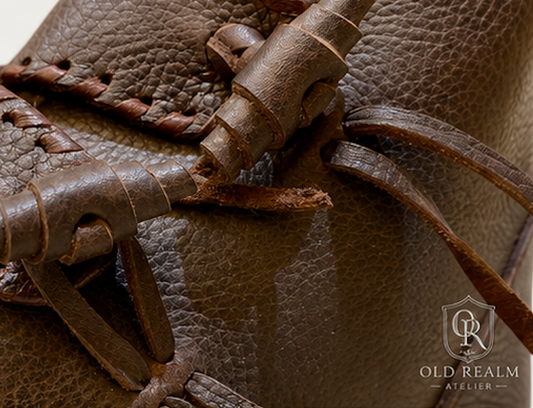
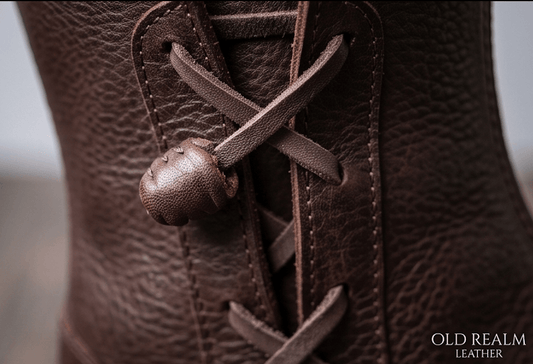
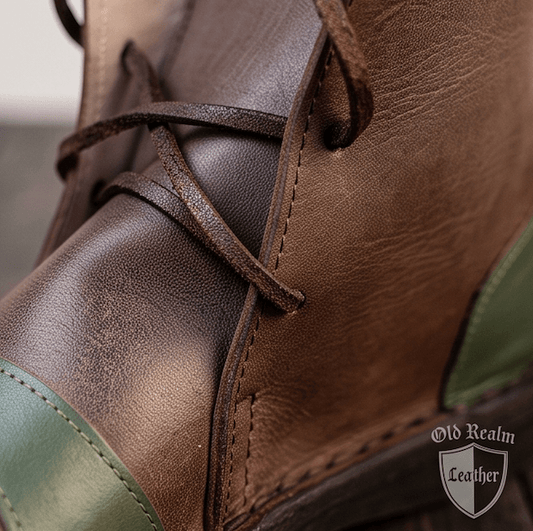
Open the boots so you can clean around tongues, lace areas, and seams. This also improves airflow during drying.
Brush away loose dirt
Use a soft shoe brush or clean cloth to remove dried soil. Work gently around stitching and decorative details rather than scraping with a hard edge.
Wipe remaining dirt with a damp cloth
Use a slightly damp cloth for residue that remains after brushing. Avoid soaking the leather. Work in small sections and dry excess moisture with a clean towel.
Do not place wet boots beside direct heat
Radiators, hair dryers, heaters, and campfires can dry leather too quickly. Let the boots dry gradually in a ventilated room away from intense heat.
Help the interior dry
Loosen the boot opening and remove any removable inserts if the design includes them. Absorbent paper can help draw moisture from the interior; replace it as it becomes damp.
Condition after the boots are dry
Once the leather is clean and fully dry, a compatible leather conditioner can help maintain flexibility. Apply sparingly and test first because conditioning products may deepen the color.
Reapply water-resistant treatment when needed
Frequent wet events can gradually reduce the effect of a protective wax or treatment. Follow our medieval boot water-resistance guide before the next muddy weekend.
What not to use
- Bleach or strong household chemicals
- Abrasive scrub pads
- Direct high heat
- Large amounts of water
- Heavy conditioner on dirty leather
Check the boots while cleaning
Cleaning is a good time to inspect laces, closures, stitching, and the sole edge. If something has loosened after a demanding event, address it before the next one.
Build a simple event-care kit
A soft brush, cloth, spare laces, and a small amount of compatible conditioner are enough for most routine care. You do not need an entire workshop to keep leather footwear ready for the next event.
Looking for another pair for outdoor use? Compare our Handmade Medieval Leather Boots for LARP & Reenactment and the full heritage footwear collection.