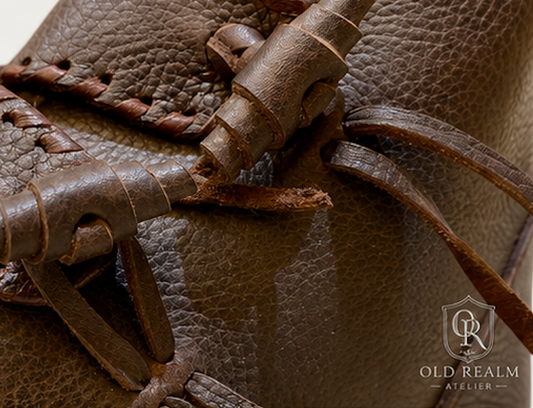
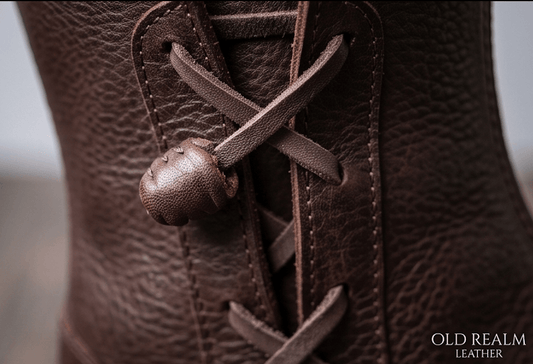
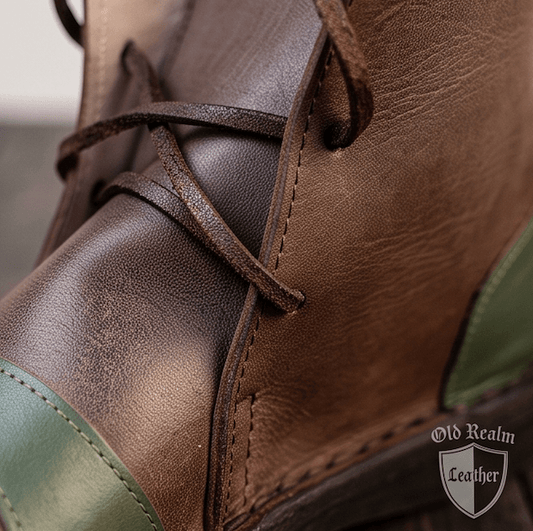
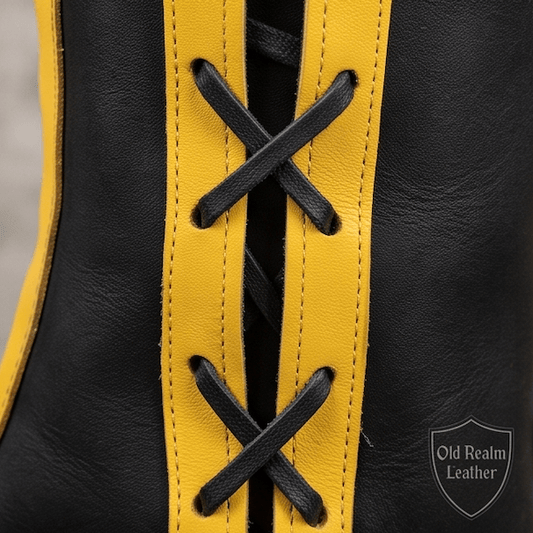
Do not make your first full day in new medieval boots the same day as your Renaissance Faire, LARP campaign, or reenactment weekend. Handmade leather footwear becomes more comfortable as it flexes and adapts to your feet, but that process is much easier when you start gradually.
Before choosing a pair, explore our medieval leather boots. Once your boots arrive, use the plan below.
Why leather boots need a break-in period
New leather can feel firmer around the ankle, instep, and flex points. With normal wear, the upper begins to bend where your foot naturally bends. The objective is to let that happen over several shorter sessions instead of forcing the process during an eight-hour event.
Start indoors
Wear the boots at home on clean floors for short sessions. This lets you confirm the fit while keeping the soles in return-eligible condition if your pair qualifies and you discover a sizing problem.
Wear the socks you plan to use at the event
Sock thickness changes the fit. If you plan to wear wool or padded socks at the faire, use those during break-in so the boot adapts around the same amount of volume.
Build up your walking time
Begin with 20–30 minutes, then extend to an hour or two if there are no painful pressure points. Several moderate sessions are more useful than one long session that leaves your feet sore.
Flex naturally instead of forcing the leather
Walking, climbing stairs, and normal ankle movement create useful flex. Avoid extreme bending, soaking, heating, or other shortcuts that can distort the leather or finish.
Use conditioner only when appropriate
A small amount of compatible leather conditioner can help maintain flexibility, but more is not always better. Check the finish and use a product intended for the leather. Do not saturate the boot.
Watch for the difference between stiffness and bad fit
Stiff leather can soften. A boot that is too short, painfully narrow, or badly positioned on your foot is a different problem. If the toes are compressed or the ball of the foot does not sit in the right place, stop and reassess the size.
Our medieval boot sizing guide can help you distinguish normal new-boot firmness from a sizing mismatch.
Test on the kind of ground you expect
Once you are confident about the fit, try the boots on safe outdoor surfaces similar to your event: packed dirt, grass, or gentle uneven ground. This helps you learn how the footwear feels before the day matters.
How long should break-in take?
There is no universal number of hours because leather thickness, boot design, foot shape, and how often you wear them all matter. The useful rule is simple: give yourself multiple wear sessions before your event rather than relying on one last-minute day.
Pack a backup plan for the first event
If the event allows it, keep spare socks, blister care, and comfortable backup footwear nearby. Even a well-fitted new boot can feel different after several hours on your feet.
Order early enough to prepare
Old Realm Leather pairs are made to order, so allow production and delivery time plus your own break-in time. If your event has a fixed date, read our guide to ordering Ren Faire boots on time.
Ready to compare options? Start with our Handmade Medieval Leather Boots or browse the full heritage footwear collection.