A good Renaissance Faire or LARP outfit should look convincing, feel comfortable for hours, and work as one complete character rather than a pile of unrelated costume pieces. The easiest way to build that kind of outfit is from the ground up: start with footwear, then choose trousers or skirts, layers, belts, outerwear and accessories that all support the same role.
This guide is designed for people preparing for a Renaissance fair, LARP event, SCA gathering, medieval wedding, fantasy festival or historical-inspired costume. It focuses on practical choices you can actually wear all day, with special attention to footwear because sore feet can ruin an otherwise perfect event.
1. Start With the Character, Not the Shopping List
Before you buy anything, decide who you are trying to look like. A merchant, ranger, noble, Viking-inspired traveler, mercenary, pirate or peasant will naturally need different shapes, colors and accessories.
You do not need a complicated backstory, but you should have a simple visual direction. Ask yourself whether the character should look rugged, refined, practical, wealthy, mysterious or battle-ready. That one decision helps every later purchase feel connected.
For example, a ranger outfit may use brown leather boots, darker trousers, a simple tunic, a cloak and practical belts. A noble character may use cleaner colors, more structured layers and polished black or dark brown footwear. A Viking-inspired outfit may use earthy wool or linen tones, leg wraps and lower-profile shoes or taller leather boots.
2. Build the Outfit From the Ground Up
Footwear affects comfort, silhouette and the overall credibility of a historical-inspired outfit. Modern running shoes can instantly break the look, while cheap costume boots often look convincing for a photo but become uncomfortable after hours of walking.
That is why it makes sense to choose footwear before you finalize trousers, leg wraps or lower costume layers.
For a strong medieval or fantasy base, browse our Medieval Leather Boots. If you prefer a lower silhouette, compare them with our Medieval Leather Shoes.
3. Medieval Boots vs Medieval Shoes
Both can work for Renaissance fairs and LARP, but they create different silhouettes.
| Feature | Medieval Boots | Medieval Shoes |
|---|---|---|
| Look | Stronger, more dramatic silhouette | Subtle, lower-profile silhouette |
| Good for | Rangers, warriors, adventurers, pirates, fantasy characters | Merchants, villagers, Viking-inspired outfits, lighter historical looks |
| Leg wraps | May partially cover them | Keeps more of them visible |
| Coverage | More ankle and lower-leg coverage | More open around the ankle |
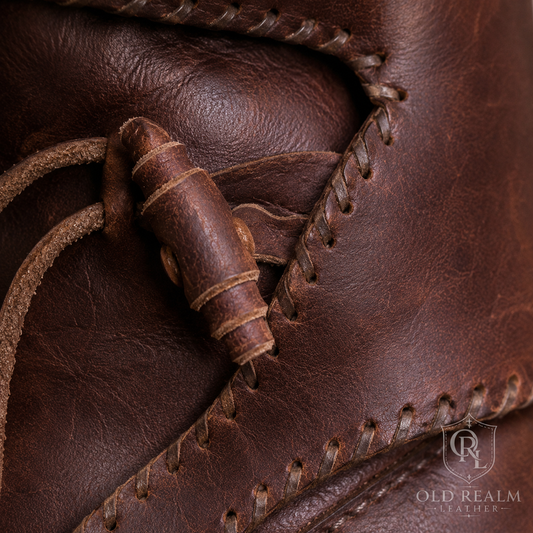
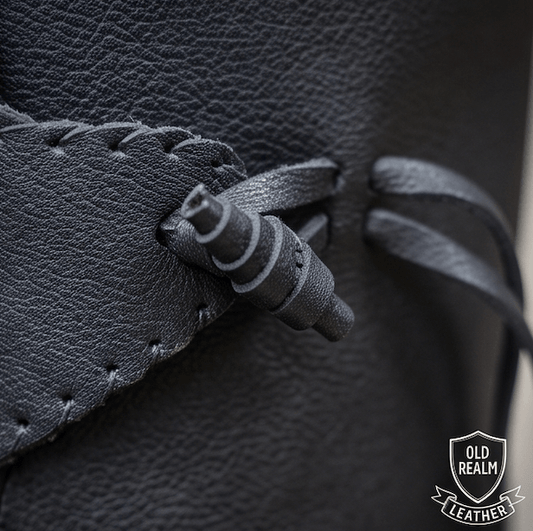
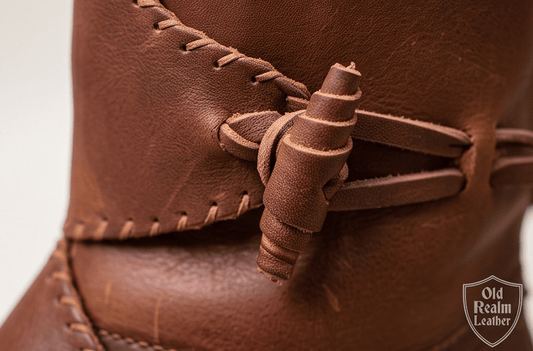
For a versatile boot, our Handmade Medieval Leather Boots for LARP & Renaissance Fairs use full-grain cowhide, a mid-calf shape and a toggle-and-lace closure. For a lower option, see our Medieval Shoes for Viking & Renaissance Wear.
4. Fit Matters More Than Costume Accuracy After Hour Six
A perfect outfit is not useful if you are limping halfway through the day. Measure both feet while standing and compare the larger measurement with the sizing information for the pair you want.
Pay attention to width as well as length. If you normally struggle with narrow boots, do not simply jump several full sizes. Instead, send your heel-to-toe length and widest-foot measurement before ordering.
Old Realm Leather offers sizing help and selected wide/custom options through our Custom Order & Sizing Help page.
For sizing, start with our Medieval Leather Boots Sizing Guide. Then use our boot break-in guide before your event. For a broader overview of materials and construction, read the complete Medieval Boots Guide.
5. Build Your Renaissance Faire or LARP Outfit in Layers
Layering is one of the easiest ways to make a costume look more believable. Instead of relying on one dramatic garment, use several simpler pieces that create depth.
Base Layer
Start with a simple shirt, chemise, tunic or undershirt in a natural-looking fabric. Neutral shades such as cream, off-white, tan, muted green, brown, burgundy or charcoal are easy to combine.
Lower Layer
Choose trousers, breeches, skirts or dresses that fit the character. If you are wearing taller medieval boots, make sure the trousers can sit naturally inside or above the shaft. With lower shoes, leg wraps or stockings become more visible and can add texture.
Mid Layer
Add a vest, jerkin, second tunic, bodice or fitted layer. This is where the outfit begins to look intentional rather than like a single costume piece.
Outer Layer
Cloaks, coats, hoods and capes add movement and visual weight. They also help when temperatures change during a long outdoor event.
6. Use a Simple Color Palette and Mix Textures
Many convincing outfits use only three or four main colors. Instead of trying to match every item exactly, combine tones that look as if they belong to the same world.
A practical ranger palette might use brown leather, dark green, charcoal and cream. A merchant could use tan, burgundy, off-white and dark brown. A darker fantasy character might use black leather, deep red and grey.
Texture also matters. Leather footwear, woven fabrics, linen, wool-like layers, metal buckles and wood accessories create more visual depth than a costume made entirely from one shiny synthetic material.
Our boots are handmade in leather, so natural grain and tonal variation become part of the outfit rather than looking perfectly uniform. Learn more on our Craftsmanship page.
7. Add Belts and Accessories After the Main Outfit Works
Accessories should support the character instead of hiding a weak base outfit. Build the clothing and footwear first, then add belts, pouches, hats, gloves, jewelry, cloaks or prop-safe accessories.
One or two believable accessories usually work better than covering every inch of the costume. A good belt and pouch can do more for a merchant or traveler outfit than five unrelated fantasy props.
For LARP, also check the event organizer's rules before bringing any weapons, shields or props. Different games may have specific safety requirements.
8. Plan Your Renaissance Faire or LARP Outfit for Heat, Rain and Cold
Outdoor events can shift from cool mornings to hot afternoons and back again. Build an outfit that can lose or gain a layer without falling apart visually.
For warm weather, breathable base layers and fewer heavy outer garments are helpful. In cooler weather, add cloaks, thicker socks and layered tunics rather than relying on one extremely heavy piece.
If leather footwear becomes damp, let it dry naturally after the event. Avoid placing wet leather directly beside heaters or using high heat. Our Leather Care Guide explains a simple after-event routine. For hot events, see our Summer LARP Footwear Guide; for wet conditions, read How to Waterproof and Protect Medieval Leather Boots.
9. How to Build a LARP Outfit That Can Actually Move
A LARP outfit has to survive more than photographs. You may walk through woodland, kneel, run, sit on the ground, climb slopes or spend hours standing.
Before your event, wear the complete outfit at home. Walk, sit, bend and move in it. Check whether belts shift, whether trousers pull at the knees, whether your cloak catches under your boots and whether the footwear stays secure around the heel and ankle.
If your LARP involves active combat, prioritize secure closures and practical soles. Our Fantasy Boots for LARP & Medieval Cosplay are one option for a rugged character silhouette. You can also compare LARP boots for rangers, rogues, warriors and mages or read our outdoor LARP footwear guide for mud, grass and woodland terrain.
10. What to Wear to a Renaissance Faire
A Renaissance Faire outfit does not always need the same mobility as a combat-focused LARP kit, but comfort still matters because most fairs involve hours of walking, browsing stalls, eating, watching performances and standing in crowds.
You can usually lean more heavily into visual styling: dramatic cloaks, richer colors, tall boots, hats and layered accessories. Just make sure the footwear and base layers remain practical.
If Renaissance-fair styling is your main goal, compare our Renaissance Faire Boots Handmade in Leather with the full Medieval Leather Boots collection. For a complete footwear decision, read What Shoes to Wear to a Renaissance Faire and our Ren Faire Shoes vs Boots comparison.
11. What to Avoid
- Buying the boots last: footwear can affect trouser length, leg wraps and the overall silhouette.
- Wearing brand-new boots for the first time at the event: break them in gradually.
- Choosing size by memory alone: measure both feet.
- Too many unrelated accessories: keep one clear character direction.
- Ignoring the weather forecast: outdoor fairs and LARPs can change quickly.
- Using direct heat to dry leather: let damp boots air-dry naturally.
- Prioritizing a perfect photo over all-day comfort: if you cannot comfortably move in it, the outfit needs adjustment.
12. Renaissance Faire & LARP Event Checklist
Before leaving for the event, check that you have:
- Broken-in boots or shoes
- Comfortable socks plus a spare pair
- Base shirt or tunic
- Trousers, skirt or dress
- Mid layer such as a vest, jerkin or bodice
- Cloak or weather layer if needed
- Belt and essential pouch
- Water
- Weather protection
- Any event-approved props or accessories
Build the Outfit Around Footwear You Can Actually Wear
A Renaissance Faire or LARP outfit works best when every piece supports the same character and the person wearing it can move comfortably all day. Start with footwear, choose a simple palette, build layers, then add only the accessories that make the character clearer. If you want help matching boots or shoes to tunics, breeches, chausses and cloaks, use our medieval footwear styling guide.
For a strong starting point, browse our Medieval Leather Boots or compare them with our Medieval Leather Shoes. If you are unsure about sizing, send us your foot measurements before ordering.
Related Renaissance Faire & LARP Guides
Use these focused guides to go deeper on footwear, fit and event preparation:
- Medieval Leather Boots Sizing Guide
- How to Break In Medieval Leather Boots Before a Ren Faire
- What Shoes to Wear to a Renaissance Faire
- LARP Boots for Rangers, Rogues, Warriors and Mages
- LARP Boots for Mud, Grass and Woodland Terrain
- How Early Should You Order Handmade Ren Faire Boots?
Frequently Asked Questions
What should I wear to a Renaissance Faire?
A simple outfit can include a tunic or shirt, trousers or skirt, a belt, comfortable medieval-inspired footwear and one or two character accessories. Layers usually look more convincing than a single costume piece.
Can I wear the same outfit for LARP and a Renaissance Faire?
Often yes, especially for fantasy or medieval-inspired events. For LARP, make sure the outfit allows more movement and follows the organizer's safety rules.
Are boots better than shoes for LARP?
Boots provide more ankle and lower-leg coverage and create a stronger ranger or warrior silhouette. Shoes are lighter and keep leg wraps or stockings more visible. The best choice depends on the character and terrain.
How early should I order boots before a Renaissance Faire?
Allow time for production, shipping and break-in. Old Realm Leather made-to-order boots generally require about 7–10 days for production, with express delivery usually taking 3–5 business days after dispatch. See our Ren Faire boot ordering timeline for a step-by-step planning guide.
What if I have wide feet?
Measure your foot length and the widest part of both feet while standing, then contact us before ordering. Selected boot styles can accommodate wider or custom fit requirements.
Start Your Outfit With the Right Footwear
Browse handmade medieval boots for Renaissance fairs, LARP, SCA events and fantasy outfits—or send us your measurements for sizing help.